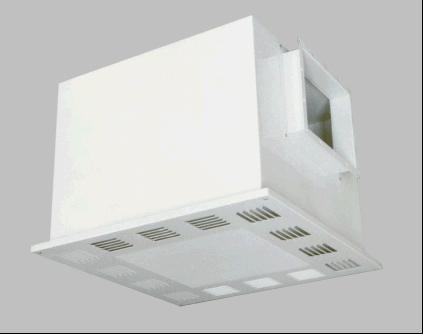
HEPA box
High filtration efficiency:Equipped with HEPA filter, the HEPA body effectively removes dust, pollen, microorganisms and other particles, ensuring clean air in pharmaceutical clean rooms.
Uniform air distribution:The diffuser provides uniform air flow distribution, which is critical to maintaining consistent air quality in areas such as hospital isolation rooms and to prevent the spread of infectious agents.
Low noise level:State-of-the-art fan and motor technology reduce noise and vibration, making it an ideal choice for quiet areas such as research labs and recovery rooms.
Easy to install and maintain:The HEPA unit is designed to integrate seamlessly with the air conditioning system, with modular components that allow for quick filter changes, saving time and money in commercial applications.
Product Introduction
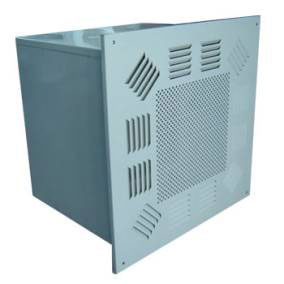
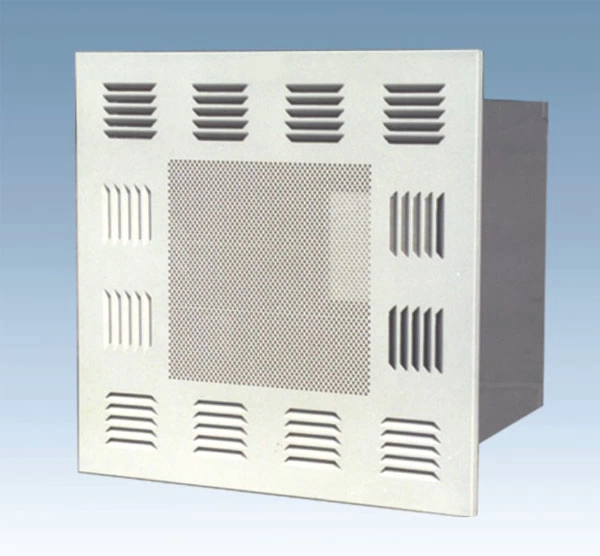
HEPA boxes, also known as high-efficiency particulate air diffusers, play a vital role in maintaining clean and healthy indoor air quality, especially in areas such as clean rooms, hospitals and laboratories.
HEPA Box has a highly effective filtration, uniform air distribution, low noise, ease of installation and maintenance, which makes it a universal solution for various environments. In clean rooms of pharmaceutical production, it effectively reduces the content of solid particles in the air, providing an environment free from pollution in the production of drugs. In hospitals, uniform air distribution helps to control the spread of infectious agents, ensuring safety and comfort for patients and staff. For research laboratories and postoperative wards of hospitals, a low noise structure provides a silent environment. In addition, its standardized and modular design simplifies installation and maintenance, providing significant time and money saving in commercial air conditioning systems.
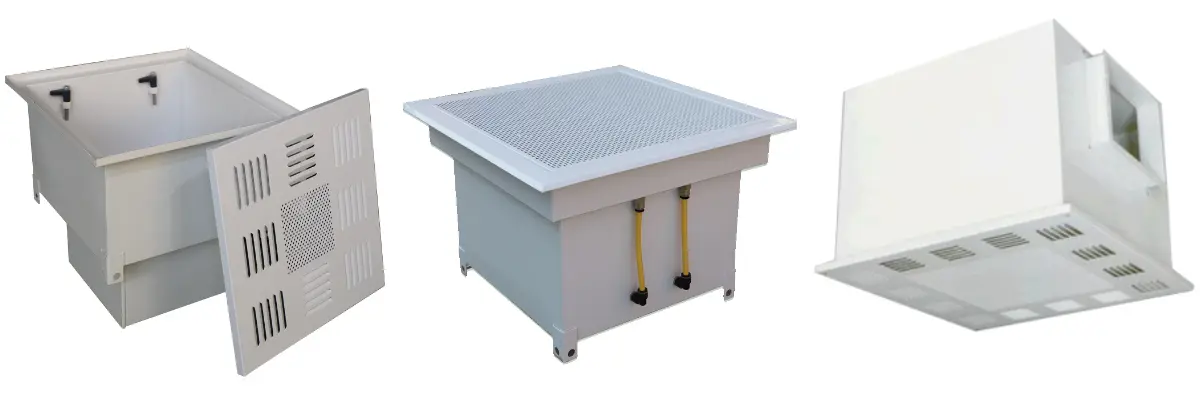
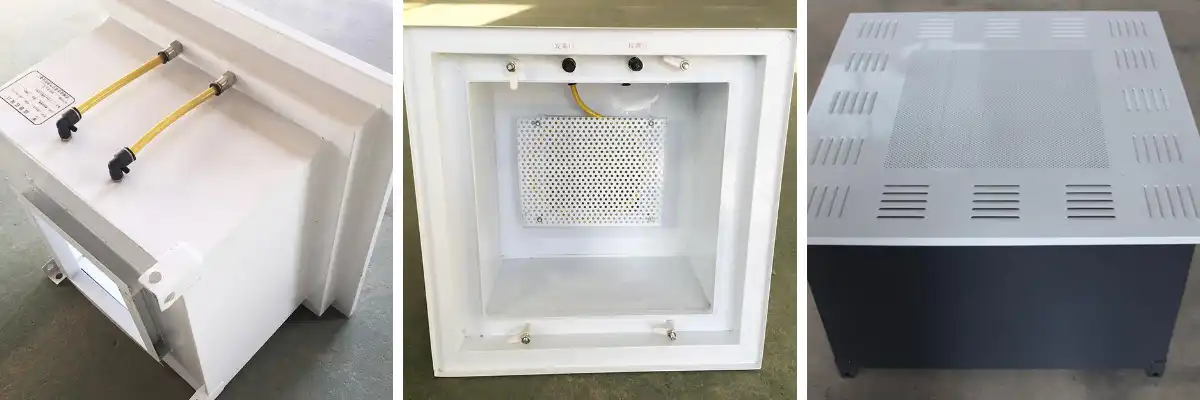
Structure and components
Corps: Hepa Box usually has a strong case made of materials such as stainless or galvanized steel. These materials provide excellent strength and resistance to corrosion, providing a long service life. The case is designed to protect internal components and maintain the integrity of the air flow path. For example, in a clean room in the production of semiconductors, the Hepa-boxed steel hip-box housing with a stainless steel withstands an aggressive chemical environment and frequent purification processes.
Hepa filter. At the heart of the HEPA box is a highly effective air filter (HEPA). Hepa filters are able to remove the vast majority of solid particles from the air. They are designed to capture particles up to 0.3 micron with an efficiency of up to 99.97%. The filter material is usually made of thin -fiber material, which creates a complex labyrinth structure through which air passes. In the operating hospital, the HEPA filter at the output of air supply plays a decisive role in filtering bacteria, viruses and other harmful particles in the air, ensuring the supply of sterile air to the surgical zone.
Diffuser: diffuser is an important component that helps to evenly distribute the filtered air. Usually it is located at the output of the HEPA box and is designed to divide the air flow into a more uniform and gentle flow. A diffuser can have various shapes and designs, for example, in the form of perforated plates or blind panels. In laboratory conditions, well -designed diffuser provides an uniform distribution of clean air through the workspace, preventing the formation of dead zones and maintaining constant air quality.
Connecting ports: HEPA boxes have connecting ports for non -rotted air and air duct fastening. These ports are carefully designed to ensure a tight compaction and proper connection of the air flow. With a large -scale installation in clean rooms, the connecting ports allow you to integrate the HEPA blocks into a complex air processing system, ensuring the effective distribution of clean air throughout the room.
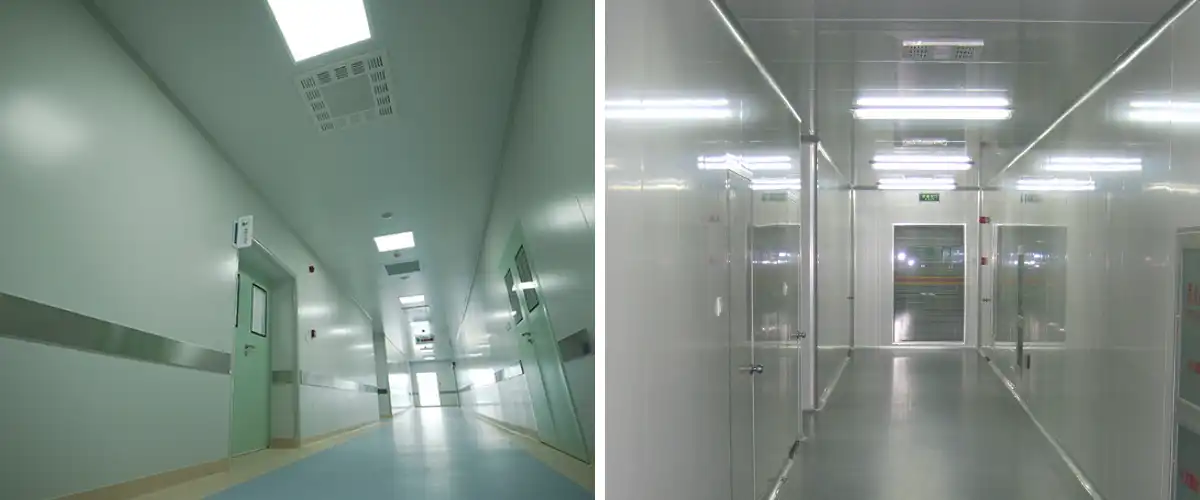
Application scenarios
Pure rooms. In various industries, such as electronics, pharmaceuticals and biotechnology, clean rooms require a high level of air purity. HEPA boxes are used to supply filtered air into these clean rooms, guaranteeing that the amount of solid particles in the air will be minimal. For example, in clean rooms for the production of semiconductors, the HEPA box help maintain a super -purified environment necessary for the production of microchips.
Hospitals: From operating rooms to intensive care units, HEPA cabinets are essential for providing a sterile, healthy air environment. In operating rooms, they supply clean air to the surgical field, reducing the risk of surgical site infections. In isolation rooms, they help contain and prevent the spread of infectious diseases.
Laboratories: In research laboratories where precision and contamination-free environments are critical, HEPA cabinets are used to maintain a clean air supply. Whether it is a chemistry lab, microbiology lab or physics lab, a HEPA unit helps protect experiments from airborne contaminants and provides the right environment for accurate measurements and reliable results.
Maintenance and precautions
Regular filter replacement. The HEPA filter in the box has a limited lifespan and requires regular replacement. The frequency of replacement depends on factors such as the level of air pollution, the hours the HEPA box is used, and the required air quality standards. In a heavily polluted industrial area or a clean room with high traffic, the filter may require more frequent replacement.
Cleaning the components: The HEPA unit housing and diffuser should be cleaned regularly to remove dust and other debris. A mild detergent and a soft-bristled brush can be used to clean the outer surface of the housing. The diffuser can be wiped thoroughly to ensure its proper air distribution function. In a hospital setting, a strict cleaning protocol may be used to ensure the hygiene of the HEPA cabinet.
System Check: Periodic inspection of the HEPA unit and associated air handling system is necessary. This includes checking air flow, pressure drop across the filter, and integrity of connection ports. Any abnormal readings or signs of damage should be addressed immediately to ensure the continued effectiveness of the HEPA unit.
Specifications
Model |
External dimensions |
Highly efficient particles |
Rated air |
Air duct |
Air duct |
Mounting dimensions |
Distance between |
Weight |
|
Side air intake |
Upper air intake |
(L×W×H mm) |
External dimension (mm) |
m/h |
(A×B mm) |
(W×D mm) |
(T×S×R×G mm) |
R mm |
kg |
GFK-320 |
GFK-320D |
370×320×220 |
320×320×220 |
500 |
200×200 |
250×250 |
438×438 |
344×344 |
20 |
GFK-484 |
GFK-484D |
534×534×530 |
484×484×220 |
1000 |
220×200 |
370×250 |
588×588×294×294 |
508×508 |
26 |
GFK-610 |
GFK-610D |
660×660×460 |
610×610×150 |
1000 |
220×200 |
370×300 |
716×716×358×358 |
634×634 |
~30 |
GFK-820 |
GFK-820D |
870×650×460 |
820×600×150 |
1200 |
320×250 |
370×300 |
926×706×436×353 |
844×624 |
~35 |
GFK-630 |
GFK-630D |
680×680×530 |
630×630×220 |
1500 |
320×250 |
370×300 |
736×736×368×368 |
654×654 |
~35 |
GFK-726 |
GFK-726D |
776×534×530 |
726×484×220 |
1500 |
320×250 |
450×250 |
832×590×416×295 |
750×508 |
~35 |
GFK-915 |
GFK-915D |
965×660×460 |
915×610×150 |
1500 |
400×200 |
500×300 |
1022×716×511×358 |
939×634 |
-40 |
GFK-968 |
GFK-968D |
1018×534×530 |
968×484×220 |
2000 |
500×200 |
550×250 |
1074×590×537×295 |
922×508 |
~50 |
GFK-1220 |
GFK-1220D |
1270×660×460 |
1220×610×150 |
2000 |
500×200 |
550×250 |
1326×716×332×358 |
1244×634 |
~55 |
GFK-945 |
GFK-945D |
955×680×530 |
945×630×220 |
2200 |
500×250 |
550×300 |
1052×736×526×368 |
969×654 |
50 |
GFK-1260 |
GFK-1260D |
1310×680×530 |
1260×630×220 |
3000 |
600×250 |
650×300 |
1366×736×455×368 |
1284×654 |
60 |
Custom orders are possible. |
|||||||||